“Taste” in the age of AI
This past January, I was entertaining for the nth time the idea of starting a blog, some kind of online publication. Despite knowing that publishing as a general business is in a sad state, and being an influencer (read: Insta-famous, YouTuber extraordinaire) is now 'the way to go,' the idea of reporting on the world and ideas has always had an undeniable magnetism for me. Like so many people who want to start any kind of endeavor—writing or business or almost anything else that requires significant effort—the biggest question that loomed was: what hasn't been done to death? What might I have that could add something new and worthwhile to the conversation? Having initial ideas is one thing, but knowing if there's a gap those will fill is another—and knowing whether people would even be interested is right on its heels.
Let's pause for a confession: I use ChatGPT, Gemini, and Claude. A lot. For work. But not really anywhere else. But there was something about this thought I had of starting some kind of ideally far-reaching idea-sharing machine like a publication that somehow felt daunting, and there's now such a handy cheat code: just "AI it," as I recently heard some ad suggest.
So. I did.
Good old Chatty G and I had a long conversation about the ideas I find interesting and the things that will stand out in today's online conversation—in the ideas swirling around the world at this specific point in time. Chatty G is very (sometimes overly) helpful. (If you're a people-pleasing type who thrives on praise, the biggest warning I can share is: beware. This little sneak will slide right into all the chinks in your armor before you even consider whether your idea for opening a frozen banana stand on the beaches of Antarctica is really a good one, no matter how wide the gap in that particular market. Gold stars, all around.)
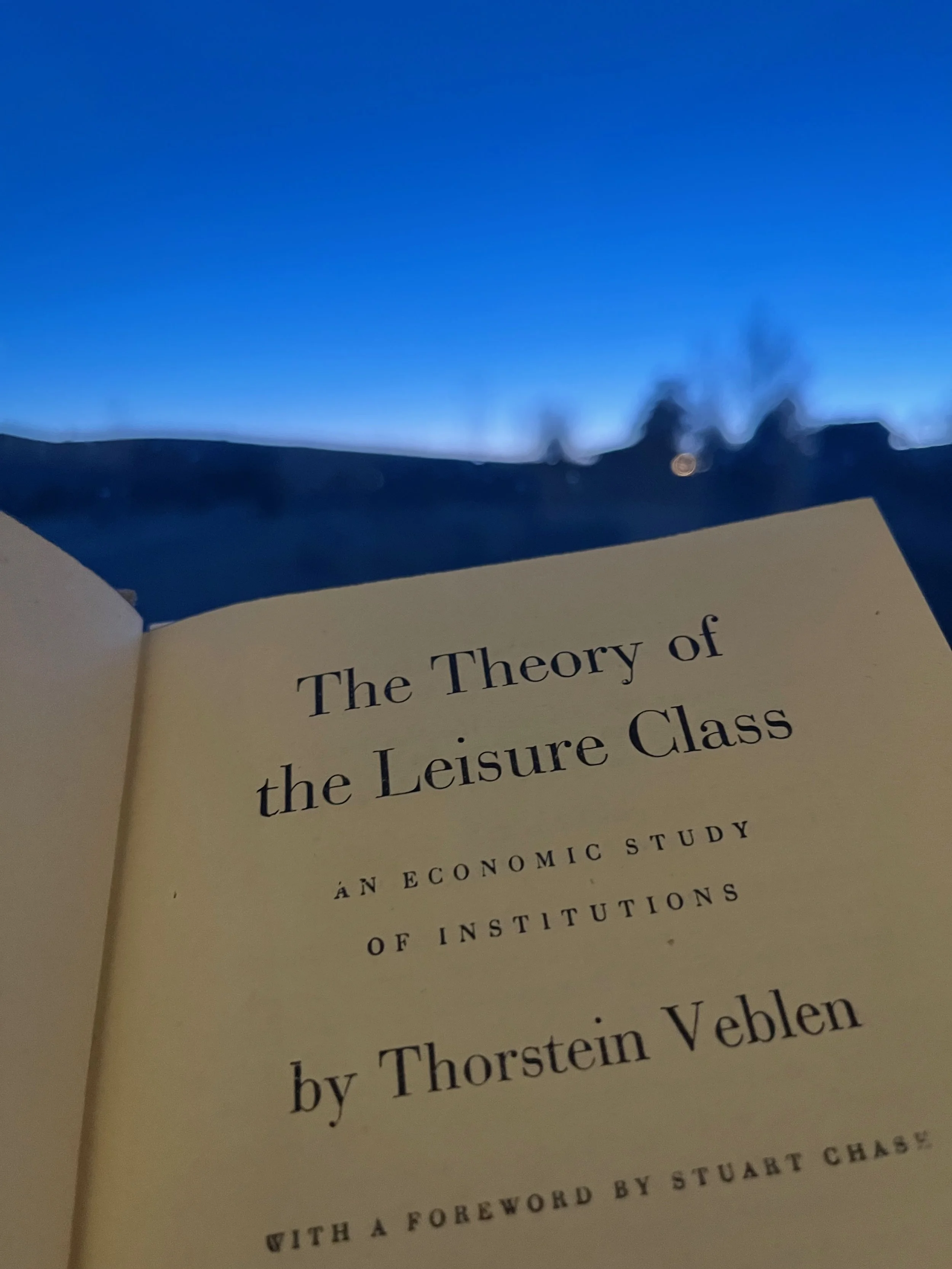
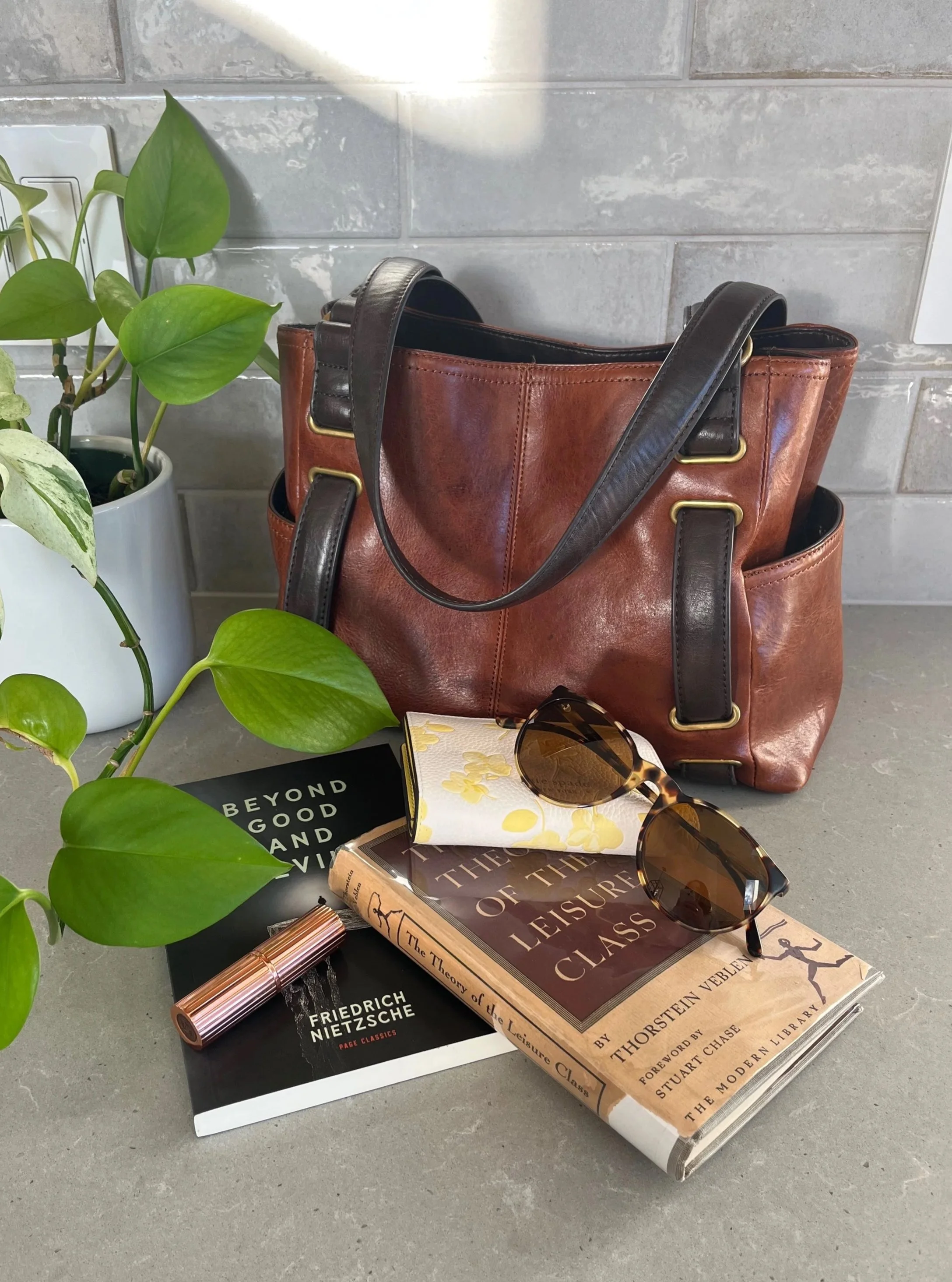
I came out of that conversation in a daze, woozy with the all the potential laid out before me in a carefully crafted (not by me) plan. I even had myself a little study plan, and one of the most prominently mentioned books on my meticulous reading list was Thorstein Veblen's The Theory of the Leisure Class. It's an 1899 gem that makes some interesting points about signaling vs. judgement, and drops some interesting facts I have yet to verify against second- and third-party sources regarding things like the fact that English riding style, accoutrements, and overall traditions arose from how the English roads used to be terrible, so the up-and-down-ness of the style was necessary at the time and has now been so entwined with the upper crust that everyone has taken on the ugly and uncomfortable style just so they can be associated with that class of people.
". . . it may be noted that this English [riding style], and the peculiarly distressing gait which has made an awkward seat necessary, are a survival from the time when the English roads were so bad with mire and mud as to be virtually impassable for a horse travelling at a more comfortable gait; so that a person of decorous tastes in horsemanship today rides a punch with docked tail, in an uncomfortable posture and at a distressing gait, because the English roads during a great part of the last century were impassable for a horse travelling at a more horse-like gait, or for an animal built for moving with ease over the firm and open country to which the horse is indigenous."
—Veblen. Devastating.
Interesting—but a useless aside. Moving on. I honestly have yet to finish the book—I'm about 270 pages into what's a deceptively palm-sized 400-page opus. And part of the reason I've started flagging is that it couldn't have been more than a month after I received my curriculum for my new venture from the unvetted AI god that I started seeing something that gave me pause.
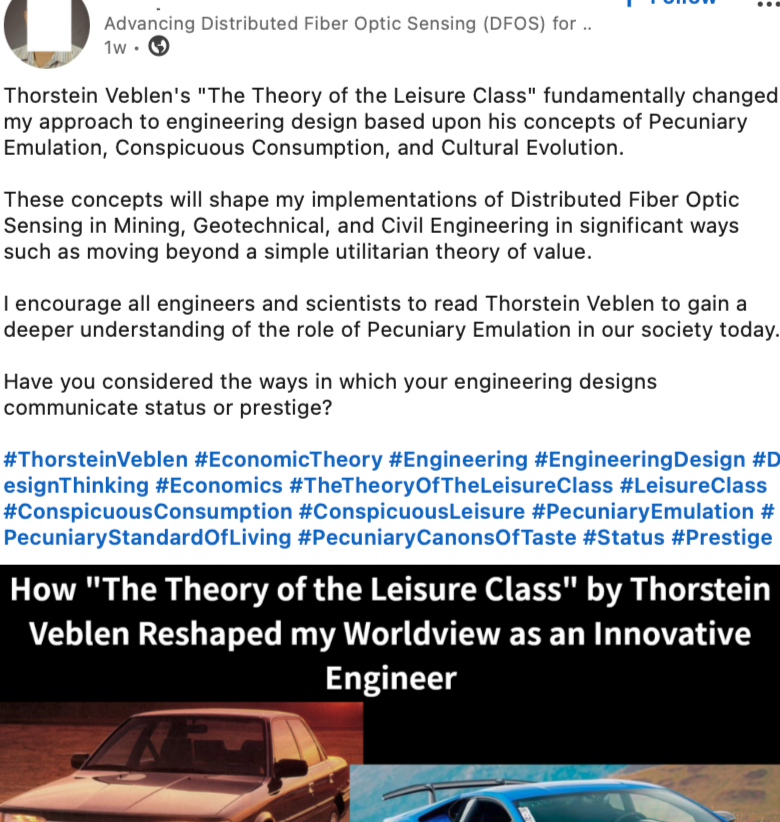
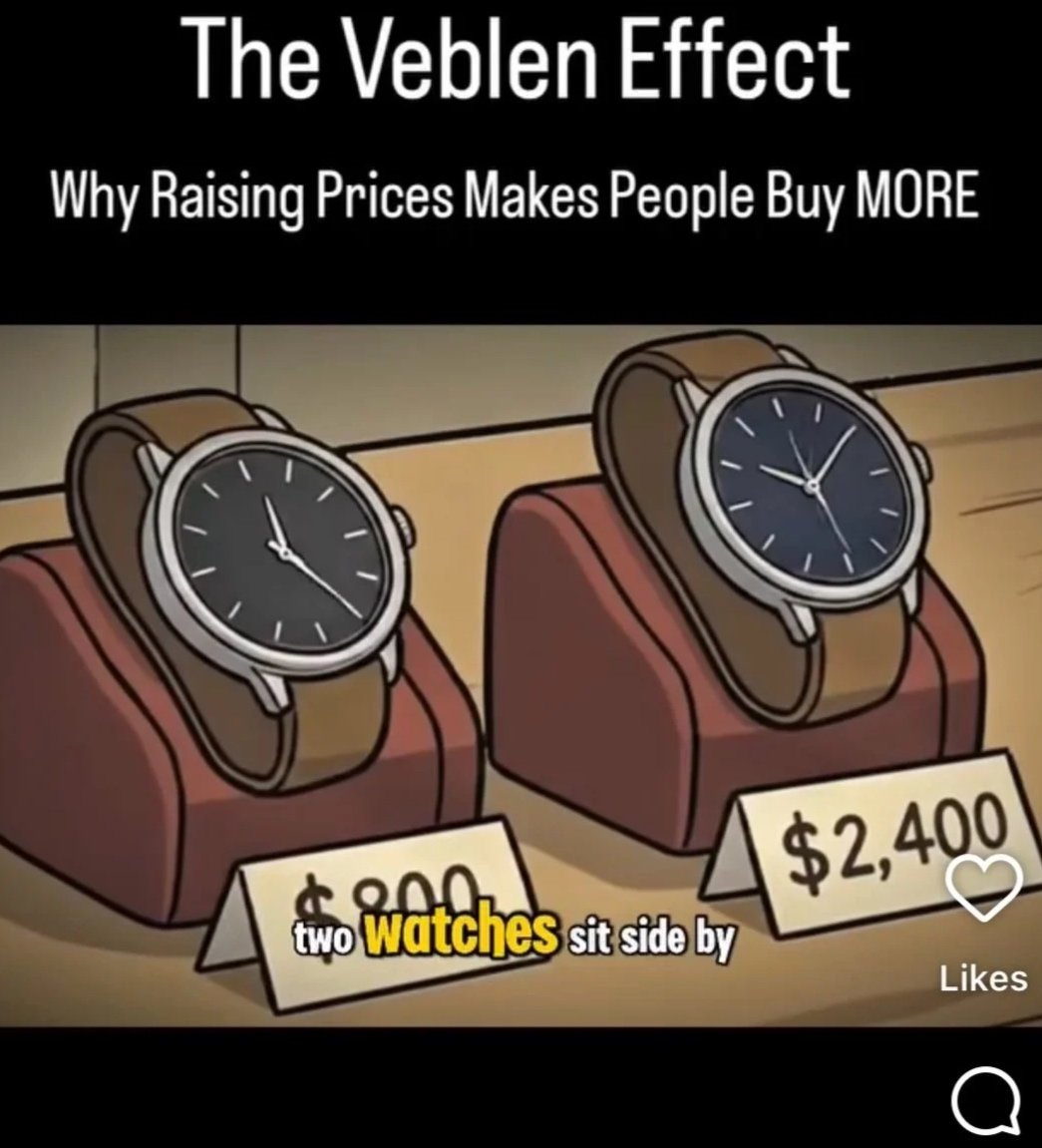
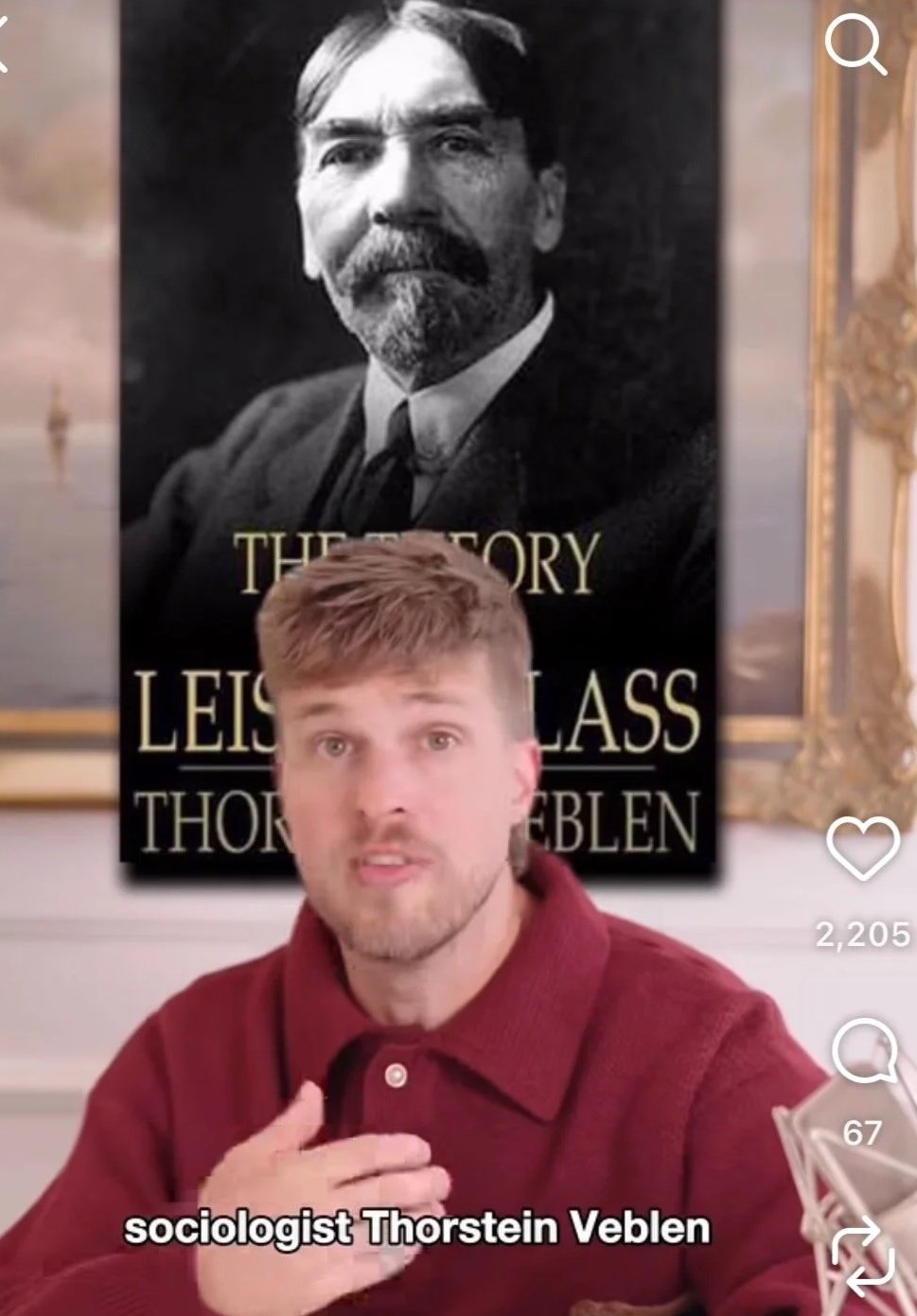
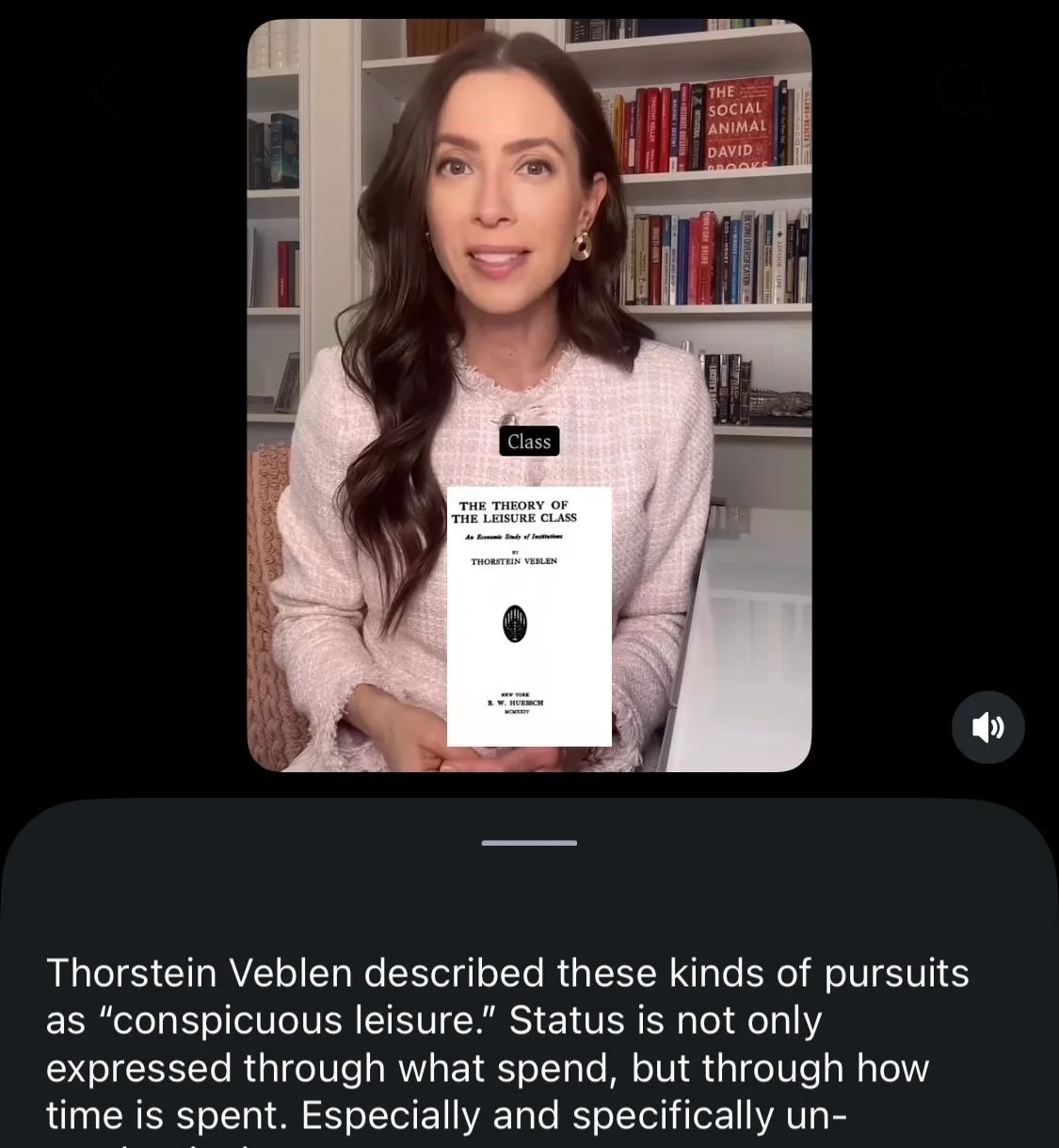
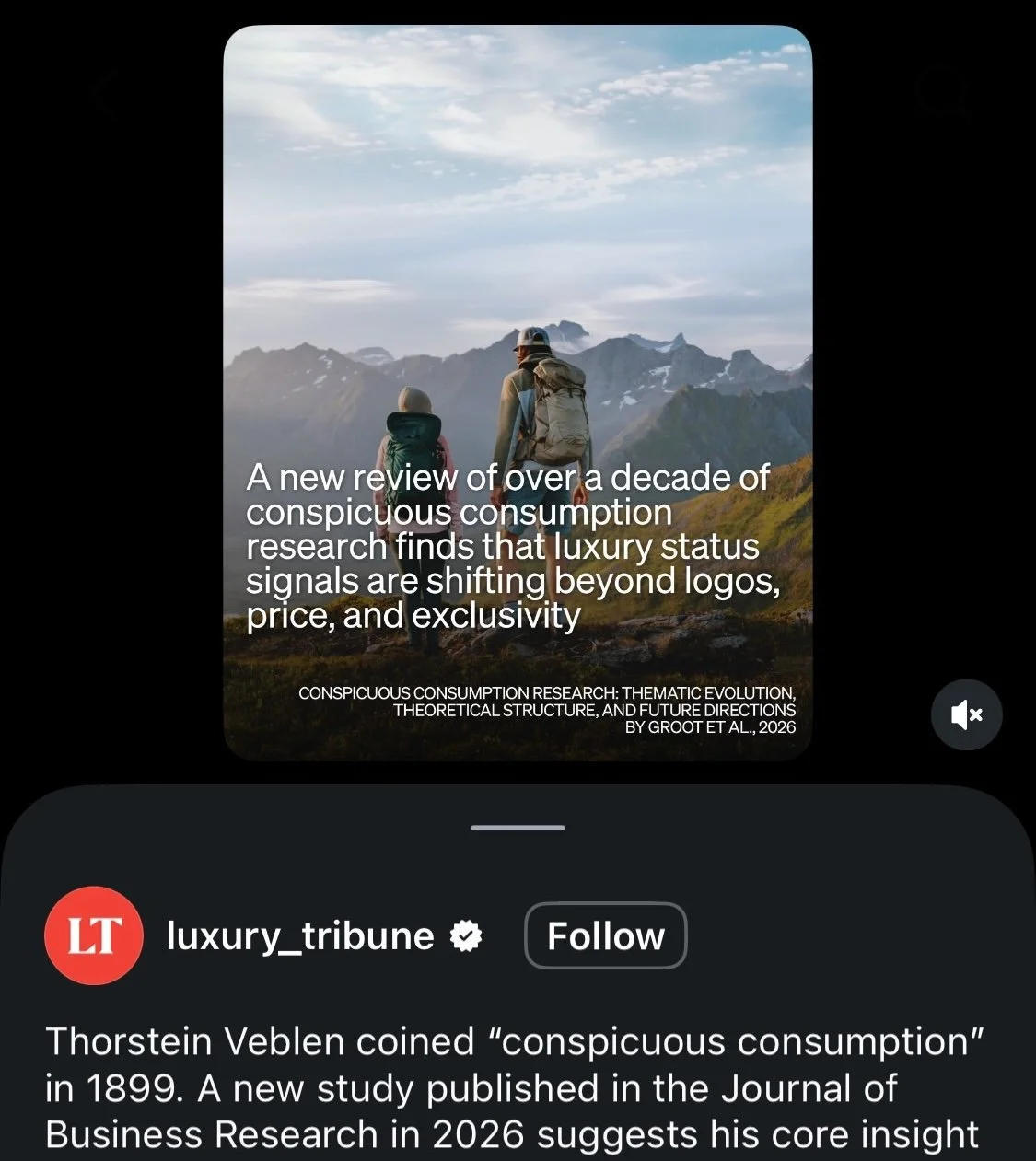
Have a scroll, there. Yes. You see it, right?
Now there's such a thing as simultaneous invention. One of the most famous was Charles Darwin and Alfred Russel Wallace with the theory of evolution. Another good one is cited by Elizabeth Gilbert in her book Big Magic, where she and Ann Patchett have been working on the same book idea, which Patchett eventually published as what I assume (having not yet read it) must have been State of Wonder. The thing with those prior examples is that just a small group of people had the same idea at around the same time. These were big and specific ideas about how the world works or what would make a great story. And yet I'm sure there are millions of smaller ideas that many more people might have simultaneously. It's not unheard of.
The other thing to point out is that I wasn’t specifically active in conversations about taste prior to this time, so of course, it might make sense that as I picked up this interesting, the algorithms would pick up on that and start spoon-feeding me Veblen. But I will note that after Chatty G and I worked on my laptop, the research I started doing was offline. I went to my local bookstore and bought a beautiful little copy of Veblen’s book. I took notes by hand in my notebook and on one billion sticky notes. My goal was to engage with the ideas independently, and then start tracking down other threads of conversation that were already happening. So as those instances started popping into my world, I hadn’t been looking for this conversation online. Even looking pedantically back at my own search history across all the usual internet places, I don’t see that there’s anything that would have been slanting any algorithms toward this conversation—most certainly not on LinkedIn where I do nothing but lurk and scroll without clicking as an absolute last resort when bored. Yet there they were.
The thing with what's happening here with this idea of taste, though, is not just the idea—it's not illogical by any means to think that now that AI can create quickly, en masse, and at a fairly decent quality, human ability to basically curate and make thoughtful selections from that deluge of abundant information and entertainment would become a premium skill. What's odder here is the specificity. Had you heard of Veblen before? I don’t doubt many a well-read person is quite familiar with his works, and there’s a good chance I heard his name once upon a literature course, but I cannot say he's been a known quantity in my world until early this year. Forgive me, but many of these online creators who are now citing his works as if they routinely fall asleep having just finished a paragraph or two of his class theories seem similarly unlikely to be avid Veblen fans.
Yet here just weeks after having my own private (heh) conversation with a fawning gen-AI bot, many others appeared to have done a similar thing. All of us had heard the message: Use AI to be more productive! We may have even heeded the warnings: Don't outsource your thinking! So we said, ok, let's just brainstorm together, little buddy. And off we went. I have no doubt that many others have come away from their chats with lists similar to mine, with Veblen's name right up there with many others in the similar sphere—think McLuhan (what a throwback—remember him?!), Kant, Hume, and all your Phil 101 friends. I highly doubt any of us had been reading these for fun since we graduated, but here so many were spouting off quotes about taste and what it means for us today as if we'd just idly picked up Of the Standard of Taste off the sofa arm where we'd casually laid it, just to reread a particularly memorable section.
I say all of this just as a way to point a finger toward something interesting that's going on and to bring you into this second level of the conversation. At one level, we're saying "Taste is a critical human ability that's now more valuable than ever with AI in the picture"—probably true. And at another level, I'm nudging you in the ribs here to say, "Look what a chatbot told us (myself included) is important today, and how we're all reporting back as if we've discovered this on our own. What's going on here, and what does this mean for us?"
I certainly don't have all the answers. I do have to wonder, though, what kind of odd recursive process has been kicked off, where the inputs and outputs are eerily similar in a new quality that even the old echo chambers lacked.
So what? What's next? A bit of a sidecar, but I came across The Metaphysical Club when looking for a different book in my library, and this looks like an interesting add-on to the idea Gilbert floats in her book, that she believes “. . . that our planet is inhabited not only by animals and plants and bacteria and viruses, but also by ideas. . . . Ideas are driven by a single impulse: to be made manifest. And the only way an idea can be made manifest in our world is through collaboration with a human partner. It is only through a human’s efforts that an idea can be escorted out of the ether and into the realm of the actual.”
Let's go off into the weeds, shall we?